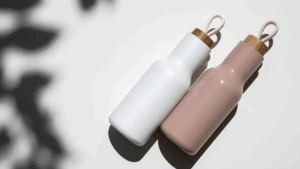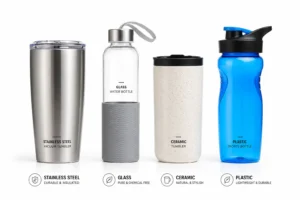
Choosing the right insulated water bottle starts with understanding the materials. Each material—stainless steel, glass, ceramic, and plastic—offers distinct advantages in temperature retention, durability, safety, and environmental impact. This guide breaks down the key differences to help you make an informed decision.
Why Material Matters for Insulated Bottles
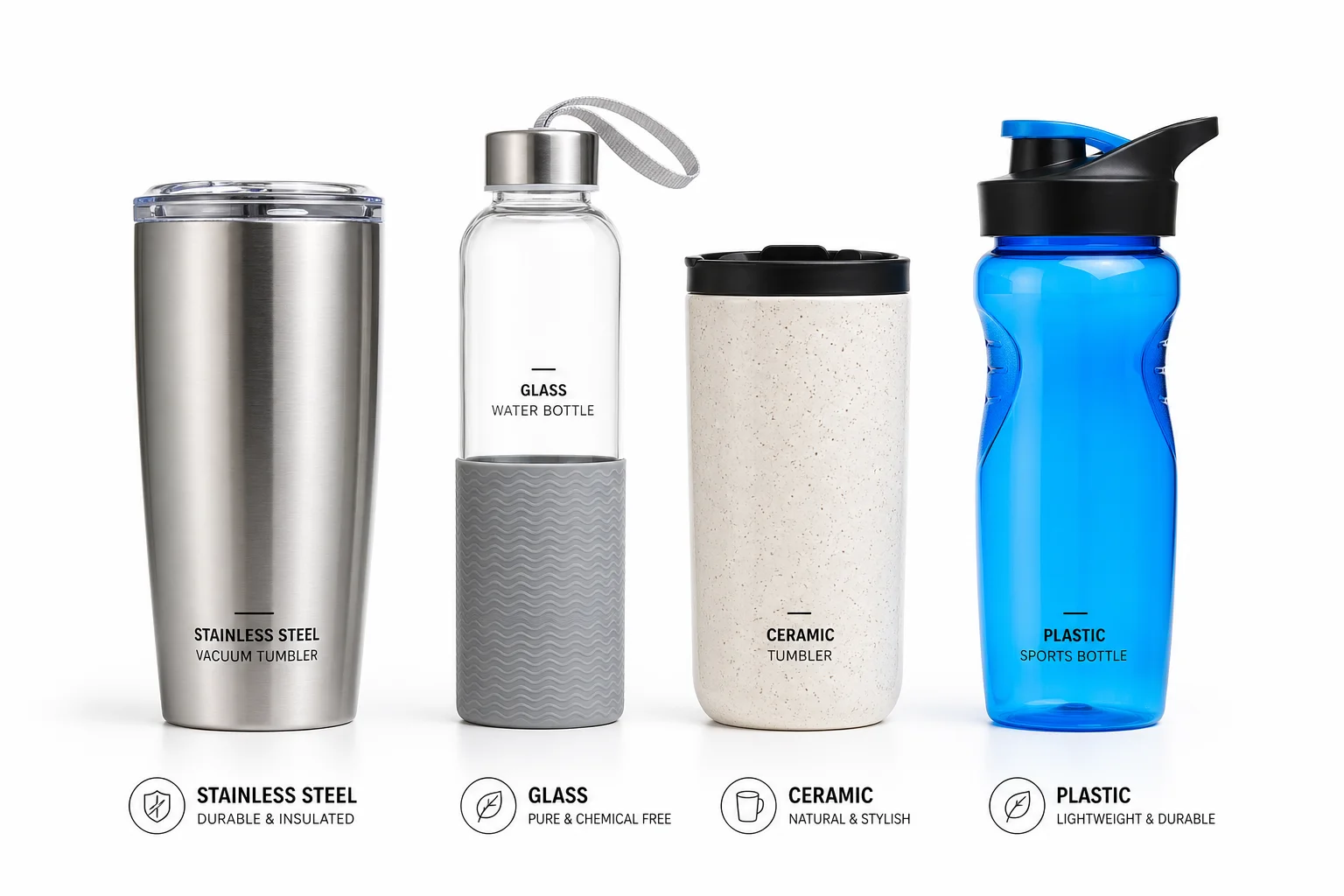
The material of your insulated bottle affects everything from how long it keeps drinks hot or cold to whether it alters the taste of your beverages. For businesses sourcing custom drinkware, material choice also impacts branding options, unit cost, and customer satisfaction.
Stainless Steel: The Industry Standard
Stainless steel is the most popular material for insulated water bottles, and for good reason. Most premium bottles use 18/8 (304-grade) stainless steel, which is resistant to rust, corrosion, and flavor transfer.
Key advantages:
- Superior insulation: Double-wall vacuum insulation keeps drinks hot for 8–12 hours and cold for 24 hours
- Exceptional durability: Resists dents, drops, and daily wear
- BPA-free and non-toxic: No chemical leaching, even with hot liquids
- 100% recyclable: Can be repurposed indefinitely without quality loss
- Wide customization options: Supports powder coating, laser engraving, and sublimation printing
Considerations:
- Heavier than plastic or single-wall alternatives
- Higher initial cost compared to plastic bottles
- Can dent if dropped on hard surfaces
Stainless steel insulated bottles are ideal for outdoor activities, corporate gifts, and everyday use where temperature retention and durability are priorities.
Glass: Pure Taste, Elegant Design
Glass bottles offer a clean drinking experience without any metallic or plastic taste. Borosilicate glass, commonly used in premium bottles, is more resistant to thermal shock than standard glass.
Key advantages:
- Neutral flavor: Does not absorb or impart tastes
- Chemical safety: No BPA, phthalates, or other chemicals
- Easy to clean: Non-porous surface resists stains and odors
- Aesthetic appeal: Transparent design shows liquid level and color
Considerations:
- Fragile and prone to breaking on impact
- Heavier than plastic, lighter than steel
- Limited insulation without double-wall construction
- Not suitable for outdoor or high-activity use
Glass insulated bottles work best for office settings, home use, and situations where taste purity matters most.
Ceramic: Comfort Meets Style
Ceramic insulated bottles and tumblers have gained popularity for their handfeel and aesthetic qualities. They are often used for coffee and tea.
Key advantages:
- Comfortable grip: Warm, natural feel in the hand
- No flavor transfer: Does not affect beverage taste
- Heat retention: Ceramic retains warmth well for hot drinks
- Customization friendly: Excellent surface for sublimation printing
Considerations:
- Breakable like glass
- Heavier than stainless steel
- Limited insulation compared to vacuum-sealed steel
- Higher production cost
Ceramic bottles are popular for branded merchandise, café retail, and indoor use where design and comfort take priority over ruggedness.
Plastic: Lightweight and Budget-Friendly
Plastic bottles are the most affordable option and remain popular for casual use, children’s bottles, and promotional giveaways.
Key advantages:
- Lightweight: Easy to carry for travel and sports
- Low cost: Budget-friendly for bulk orders
- Variety of designs: Available in countless shapes and colors
- Shatterproof: Safe for children and outdoor activities
Considerations:
- Poor insulation compared to steel or glass
- Potential for BPA and chemical leaching (choose BPA-free options)
- Absorbs odors and flavors over time
- Shorter lifespan; less environmentally friendly
- Scratches can harbor bacteria
Plastic insulated bottles suit short-term use, promotional items, and budget-conscious buyers, but they are not recommended for hot beverages or long-term daily use.
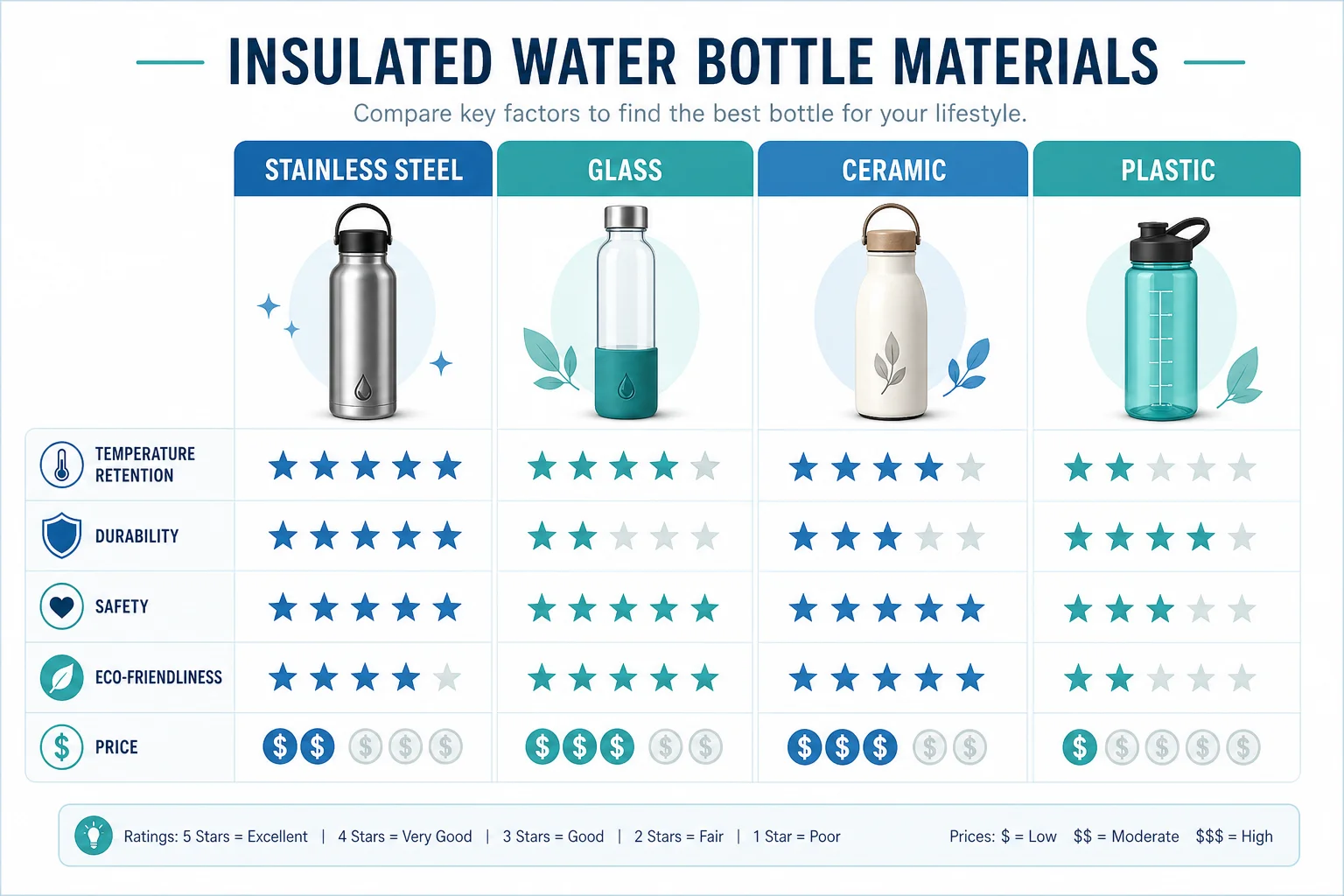
Material Comparison at a Glance
|———|—————-|——-|———|———|
| Feature | Stainless Steel | Glass | Ceramic | Plastic |
|---|---|---|---|---|
| **Temperature Retention** | Excellent (8–24 hrs) | Poor to Moderate | Moderate | Poor |
| **Durability** | High | Low (fragile) | Low (fragile) | Moderate |
| **Weight** | Heavy | Moderate | Heavy | Light |
| **Taste Neutrality** | Good | Excellent | Excellent | Fair |
| **BPA-Free** | Yes | Yes | Yes | Varies |
| **Eco-Friendliness** | High (recyclable) | High (recyclable) | Moderate | Low |
| **Customization** | Excellent | Limited | Excellent | Good |
| **Price Range** | $$–$$$ | $$ | $$–$$$ | $ |
| **Best For** | Outdoor, corporate | Office, home | Cafés, gifts | Promos, kids |
How to Choose the Right Material
Your choice depends on the intended use:
- For maximum temperature retention and durability: Stainless steel is the clear winner. Double-wall vacuum insulated bottles maintain drink temperature for hours and withstand daily abuse.
- For pure taste and health safety: Glass offers the cleanest drinking experience with zero chemical interaction.
- For branding and aesthetics: Ceramic and stainless steel both support high-quality customization through sublimation or engraving.
- For budget and bulk needs: Plastic works for short-term promotional items, but consider the trade-offs in longevity and environmental impact.
- For eco-conscious buyers: Stainless steel and glass are both fully recyclable and have the longest usable lifespans.
The Verdict
For most users and businesses, stainless steel insulated bottles offer the best overall value. They combine superior insulation, long-term durability, safety, and versatile customization options. Glass and ceramic serve niche markets where taste and aesthetics are paramount, while plastic remains a budget option for casual or promotional use.
When sourcing insulated bottles for your brand, consider how the material aligns with your customers’ priorities—whether that’s performance, sustainability, or price point.
Looking for premium stainless steel insulated bottles? [Explore Vannoble’s full product range](https://wordpress.56881186.xyz/) for customizable options designed for wholesale and OEM partnerships.